 English
 Italian
 Russian
 German
 Arabic
 Spanish
Introduction
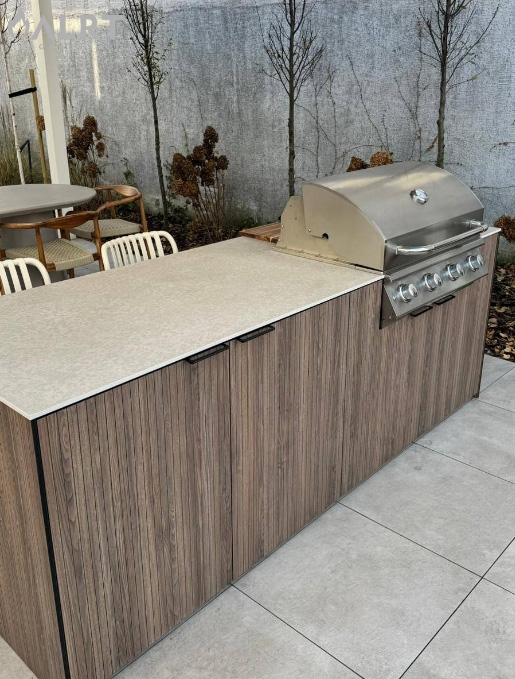
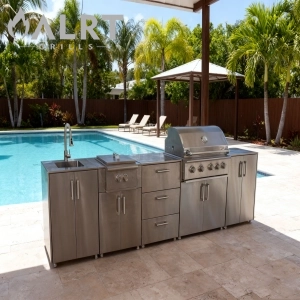
For the modern outdoor chef, grilling is no longer just about cooking food; it is about culinary precision and the theatre of the flame. As homeowners continue to invest in expanding their living spaces, built-in grills have emerged as the undisputed centerpiece of the modern outdoor kitchen. Unlike their standalone counterparts, these permanent installations are designed to rival—and often surpass—indoor ranges in both performance and durability.
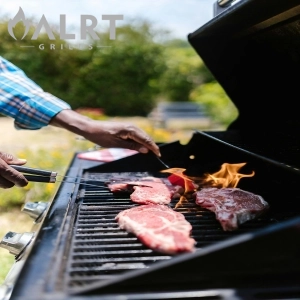
However, one specific capability separates a standard grill from a professional-grade appliance: high-heat searing. The ability to reach and sustain temperatures in excess of 800°F (425°C) is critical for achieving the Maillard reaction—the chemical process that creates the savory, caramelized crust on a premium steak while locking in moisture.
This guide explores the engineering behind high-heat searing, the technology that powers it, and how to select the best built-in grill to elevate your outdoor cooking experience.
What Defines a Great Built-in Grill for High-Heat Searing?
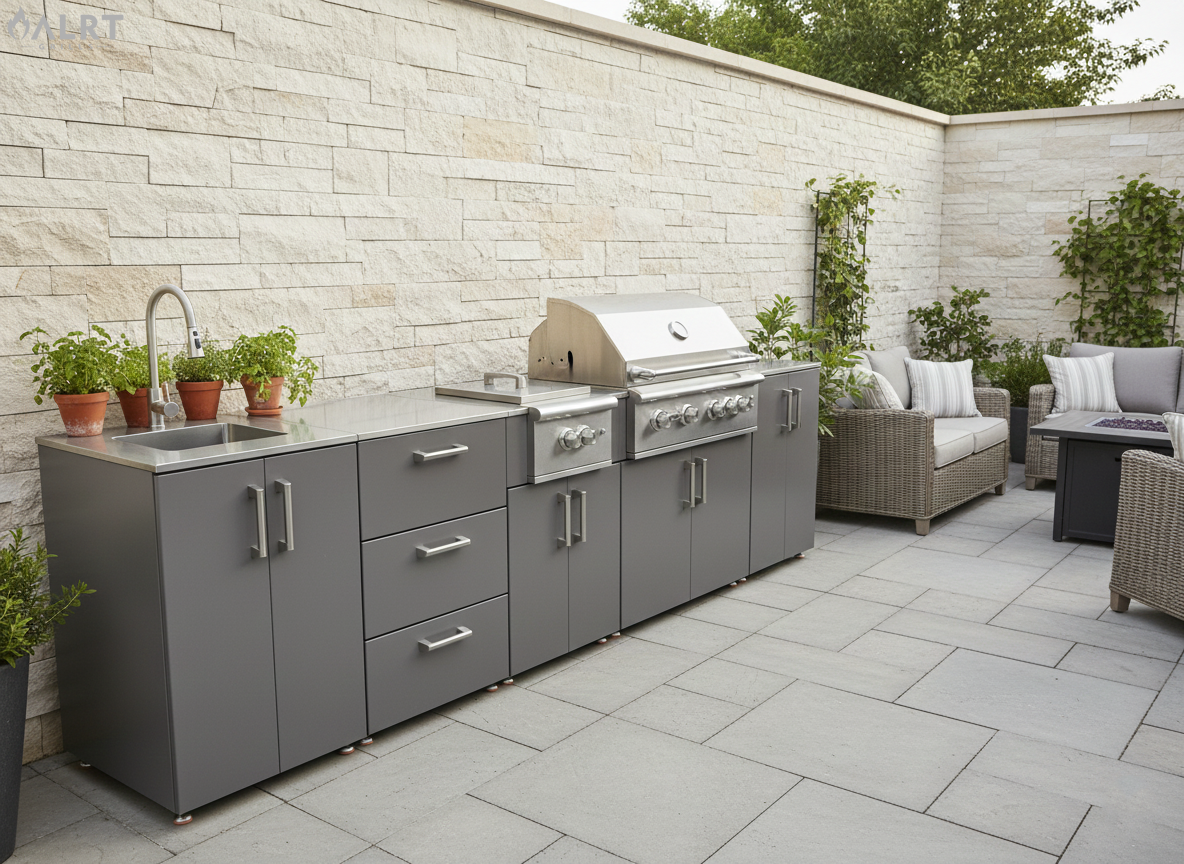
Not all grills are created equal. To achieve professional steakhouse results at home, a built-in grill must meet specific engineering standards regarding power, material quality, and heat management.
BTU Requirements and Heat Flux
British Thermal Units (BTUs) measure the total heat output of a burner, but a high BTU rating alone does not guarantee searing success. The true metric of performance is heat flux—the distribution of heat per square inch of cooking surface. A great high-heat grill balances high-BTU burners (typically 14,000–25,000 BTUs per burner) with an efficient firebox design that minimizes heat loss.
Advanced Burner Technology
The "engine" of any grill is its burners. For searing, standard hollow tube burners often fall short.
Cast Stainless Steel Burners: Heavier and thicker than tubular burners, these retain heat significantly longer and resist corrosion.
Cast Brass Burners: Known for superior durability and heat retention, often found in luxury models.
Infrared Burners: The gold standard for searing (detailed in Section 3).
Heat Distribution & Control
Consistency is key. A premium built-in grill typically utilizes a heat distribution system—such as ceramic briquettes or heavy-gauge flame tamers—to radiate heat evenly across the grates. This ensures that a steak placed in the corner of the searing zone cooks at the same rate as one in the center, eliminating "cold spots" that ruin a good sear.
Material Durability: The Importance of 304 Stainless Steel
High heat places immense stress on metal. Inferior materials like 430 stainless steel or coated steel can warp or rust under the thermal shock of rapid heating and cooling. A 304 stainless steel grill is the industry benchmark. This commercial-grade alloy contains distinct levels of chromium and nickel, rendering it non-magnetic and highly resistant to rust and heat corrosion. For a built-in unit that will live outdoors permanently, a 304 stainless steel firebox is non-negotiable.
Infrared Burners: The Key to Perfect Searing
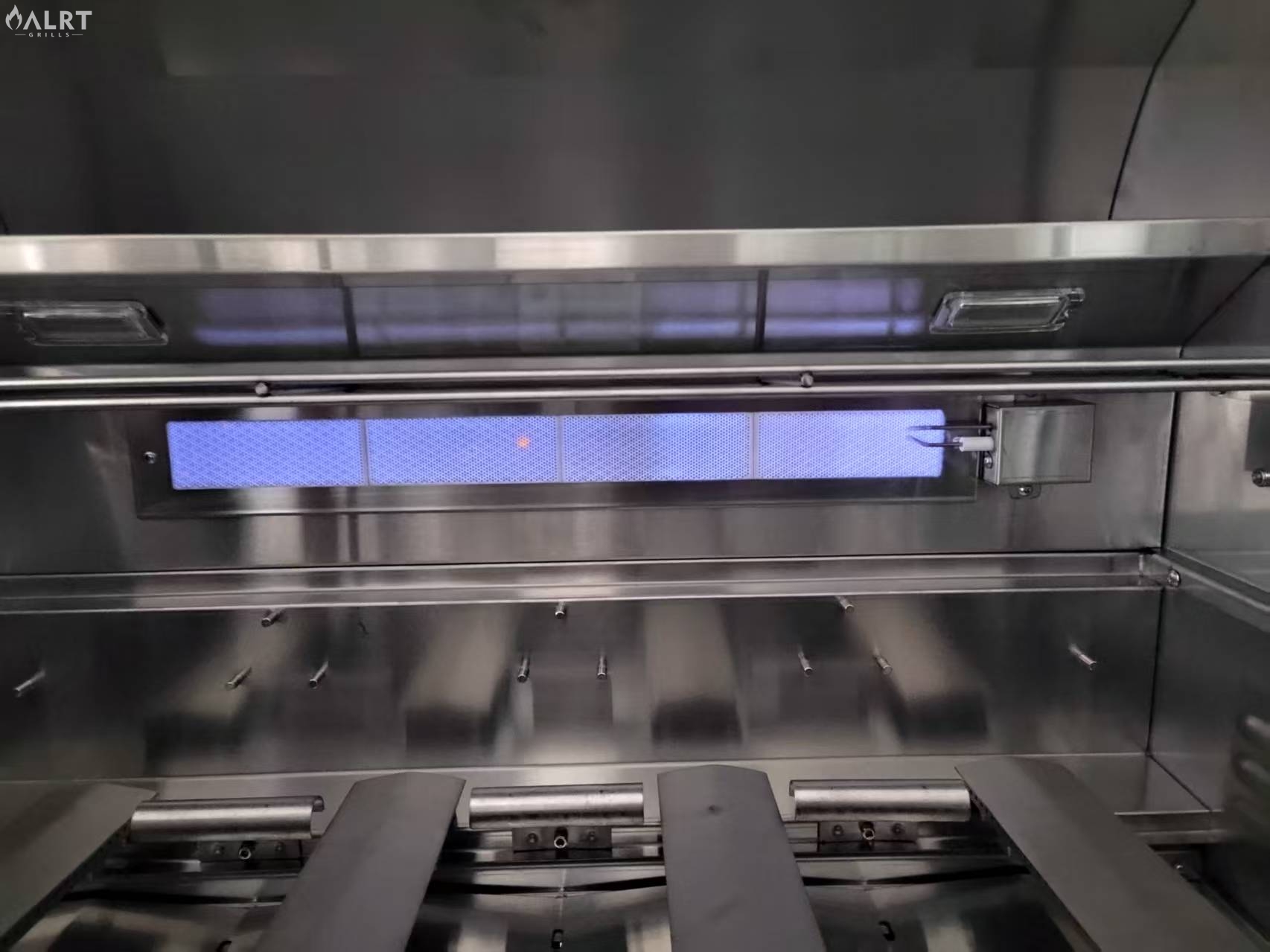
If you are chasing the perfect crust, a standard gas burner has physical limitations. This is where infrared technology changes the game.
How Infrared Burners Work
Traditional gas burners cook via convection: they heat the air inside the hood, which then cooks the food. This process can be slow and can dry out the meat. Infrared burners, however, use a ceramic tile or mesh element to convert gas energy into radiant heat. This radiant energy travels in direct waves, striking the food immediately without heating the intervening air.
The Benefits of Infrared Searing
Extreme Temperatures: Infrared burners can reach 800°C–1000°C (1500°F+) in minutes. This intensity is what creates instant caramelization.
Moisture Retention: Because radiant heat cooks faster and doesn't rely on drying hot air, the food retains up to 35% more of its natural juices compared to convection cooking.
Rapid Preheat: An infrared searing zone is ready to cook in a fraction of the time it takes for a standard burner to heat heavy grates.
Top Features to Look For in a High-Searing Built-in Grill
When evaluating specs for a new installation, prioritize these four features to ensure maximum performance.
Dedicated Searing Zone
Look for a grill that offers an interchangeable or dedicated searing zone. Some models feature a "hybrid" design where one main burner is infrared, while the others are standard gas. This allows you to sear a steak over intense heat and then move it to a cooler zone to finish cooking (the "reverse sear" method).
Ignition Reliability
High-BTU grilling requires a robust ignition system. Piezo igniters are common, but "flame-thrower" ignition systems (which use a dedicated jet of gas to light the burner) or hot-surface glow plugs are preferred for built-in luxury grills. They ensure reliable startups even in windy conditions.
Heavy-Duty Grates
Thin wire grates lose heat the moment cold meat touches them. For searing, you need high thermal mass.
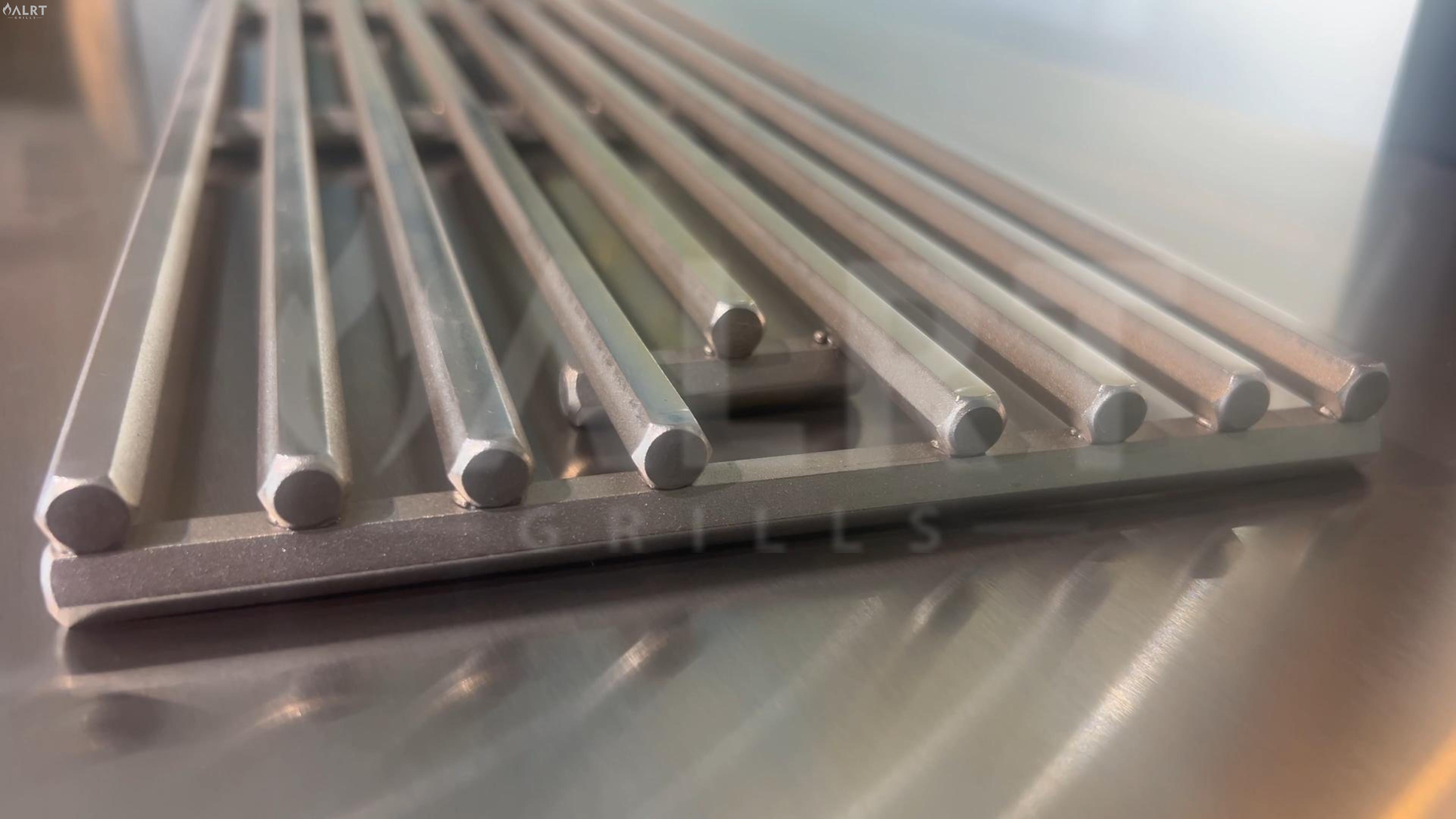
Cast Stainless Steel Grates: The best all-around choice. They offer the heat retention of cast iron but the rust resistance of stainless steel.
Diamond/Laser Cut Grates: These provide a massive surface area for contact, resulting in an all-over crust rather than just strip marks.
Optional Rotisserie with Infrared Backburner
While not for direct searing, a rear infrared burner is a hallmark of a high-end grill. It provides indirect high heat perfect for slow-roasting poultry or spinning a roast, adding versatility to your outdoor kitchen.
Comparison: High-Heat Built-in Grills vs. Standard Gas Grills
Why invest in a specialized built-in head over a standard drop-in or cart grill?
| Feature | High-Heat Built-in Grill | Standard Gas Grill |
|---|---|---|
| Max Temperature | 900°F - 1500°F+ (w/ Infrared) | 500°F - 600°F |
| Heat Retention | Excellent (Double-walled hood, heavy grates) | Moderate (Single layer, lighter materials) |
| Construction | 100% 304 Stainless Steel (Marine grade available) | Often Mixed Metals (430 SS, Painted Steel) |
| Cooking Flexibility | Zone Cooking (Sear, Roast, Bake simultaneously) | Uniform Heat (Difficult to create zones) |
| Longevity | 10-20+ Years (Often Lifetime Warranty) | 3-5 Years |
Standard grills are adequate for burgers and hot dogs, but they lack the thermal insulation and power density required to properly sear premium cuts of meat without overcooking the interior.
Recommended Models (General Classifications)
To help you identify the right equipment without limiting you to specific brands, here are three distinct "classes" of built-in grills that excel at searing.
Model Type A: The "Infrared Powerhouse"
Best For: The steak purist who prioritizes crust above all else.
Key Specs: 100% Infrared burners across the entire surface.
Performance: Zero preheat time; instant searing capability across the whole grill.
Why it wins: Unmatched speed and flavor intensity, though it has a learning curve for low-temp cooking.
Model Type B: The "Luxury Hybrid"
Best For: The versatile chef who cooks steaks, vegetables, and delicate fish.
Key Specs: 3 Cast Stainless Steel "E-burners" + 1 Dedicated Infrared Searing Zone.
Performance: 80,000+ Total BTUs.
Why it wins: Offers the best of both worlds—traditional convection for roasting and a "hot zone" for finishing steaks.
Model Type C: The "Ceramic-briquette Workhorse"
Best For: Consistent, even heat distribution and durability.
Key Specs: High-BTU Cast Brass burners with a ceramic briquette flame tamer system.
Performance: Briquettes absorb heat and radiate it evenly, allowing the grate to reach searing temps without a dedicated IR burner.
Why it wins: Extremely reliable. The ceramic briquettes mimic the even heat of charcoal without the mess.
How to Choose the Right Built-in Grill
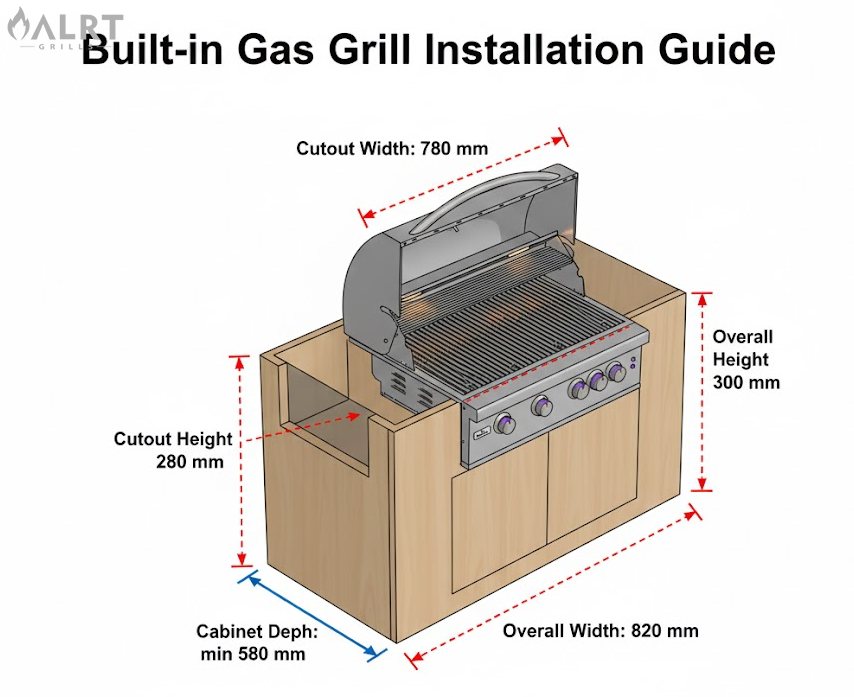
Selecting the right unit involves more than just reading BTU specs. Consider these logistical factors for your outdoor kitchen project.
Measuring Cutout Size
Built-in grills are sold by "head size" (e.g., 36-inch, 42-inch), but this does not match the cutout dimensions required for your stone island.
Action: Always obtain the manufacturer's "cutout specifications" sheet before pouring concrete or cutting stone.
Tip: If you are replacing an older unit, an "insulating jacket" or trim kit may be required to fill gaps.
Fuel Type: LP vs. NG
Natural Gas (NG): Preferred for permanent built-ins. You never run out of fuel, and it is generally cheaper. Requires a plumbed line from the house.
Liquid Propane (LP): Useful if running a gas line is impossible. Ensure your island design includes a ventilated drawer for the tank exchange.
Searing Needs vs. General Cooking
If you grill steaks 80% of the time, prioritize a unit with a large infrared zone. If you mostly slow-cook ribs or grill chicken, a high-quality standard burner system with reliable heat retention may be more forgiving and useful.
Frequently Asked Questions (FAQs)
A: If your outdoor kitchen island is constructed with combustible materials (like wood framing or composite decking), an insulated jacket is mandatory for safety. If your island is made entirely of masonry, brick, or steel, you generally do not need one, but always check the manufacturer’s manual.
A: There is a slight learning curve because it gets hot very quickly. The key is to trust the heat—sear for 1–2 minutes per side, then move the food to a cooler zone or turn the burner down to finish cooking. You cannot leave food unattended on an infrared burner.
A: Most high-end manufacturers offer conversion kits (orifices and regulators). However, converting a built-in unit after it has been installed in stone can be labor-intensive. It is best to decide on your fuel type during the design phase.
A: Unlike standard burners, you should never use water or wire brushes on the delicate ceramic tiles of an infrared burner. The best way to clean them is to turn the heat to "High" for 10 minutes after cooking; the intense heat will incinerate any food debris into ash.
A: 304 stainless steel is the industry standard for durability. 316 (often called "Marine Grade") contains Molybdenum, making it even more resistant to salt corrosion. If you live within 5 miles of the ocean, upgrading to a 316 stainless steel grill is highly recommended to prevent pitting.
Conclusion
High-heat searing is not just a technique; it is the defining characteristic of professional-level grilling. By understanding the importance of heat flux, material durability, and the revolutionary power of infrared technology, you can choose a built-in grill that serves as the heart of your home for decades.
Whether you choose a dedicated infrared powerhouse or a versatile hybrid model, investing in a high-performance outdoor kitchen built-in grill ensures that every steak you serve has that perfect, steakhouse-quality finish.
Ready to design your dream outdoor kitchen? Start by measuring your space and determining your primary fuel source to narrow down the perfect searing machine for your home.