 English
 Italian
 Russian
 German
 Arabic
 Spanish
There is a specific feeling that comes with the first cookout of the season. It’s the tactile satisfaction of turning a weighted knob, the distinct *snap* of the ignition, and the reassuring *whoosh* as the burners catch a perfect, uniform blue flame. As manufacturers who design and engineer these machines, we know that a grill is more than just an appliance; it is the anchor of your outdoor living space.
But what happens when that ritual turns into a wrestling match?
If you find yourself battling your equipment rather than enjoying the process—if you are constantly moving food to avoid cold spots, nervously using a lighter to start the gas, or worrying about the stability of the cart—it is time to face the music. An aging grill doesn't just compromise the flavor of your expensive steaks; it can present genuine safety hazards.
From our perspective on the assembly line to your backyard, here are the 7 definitive signs that your faithful grill has reached the end of its lifecycle, and why upgrading to a modern machine is the best investment you’ll make this season.
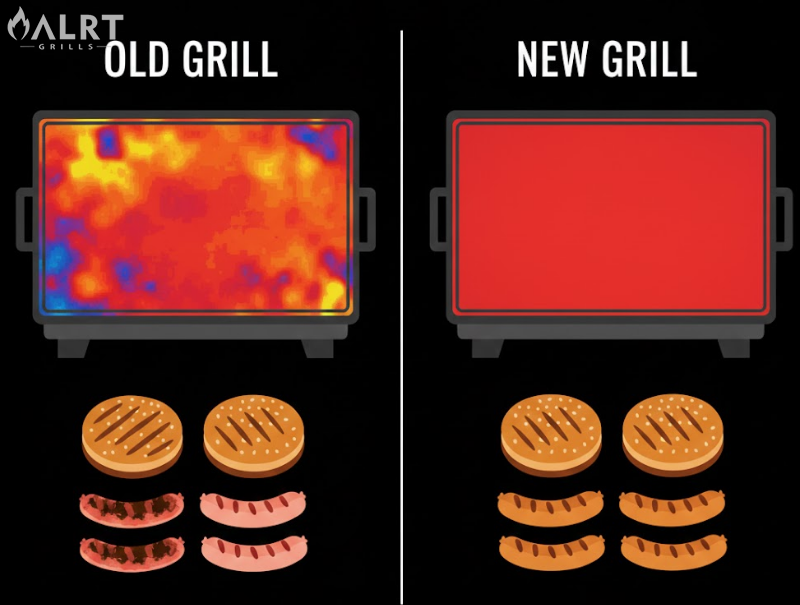
The Battle with "Cold Spots" and Uneven Heating
Have you ever noticed that the burgers on the left side of the grate are charred to a crisp, while the chicken on the right looks like it just came out of the refrigerator?
While every grill has its own unique thermal character, modern gas grills are engineered with precision airflow and heat distribution technology (often using heat diffusers or specific burner port drilling) to minimize temperature variance.
The Diagnosis:
If your grill has developed massive, unpredictable "cold zones" or scorching "hot spots," it indicates a failure in the core heating system.
Blocked Ports: Over time, grease, carbon, and food debris clog the tiny gas ports on the burners.
Warped Materials: Years of heating and cooling can warp the metal of the burners, causing gas to flow unevenly.
Why Upgrade?
You shouldn't have to be a "food shuffler," constantly rotating meat just to get an even cook. Modern grills offer consistent heat across the entire cooking surface, allowing you to trust your timing and temperature gauges.
Structural Rust and Corrosion (The Silent Killer)
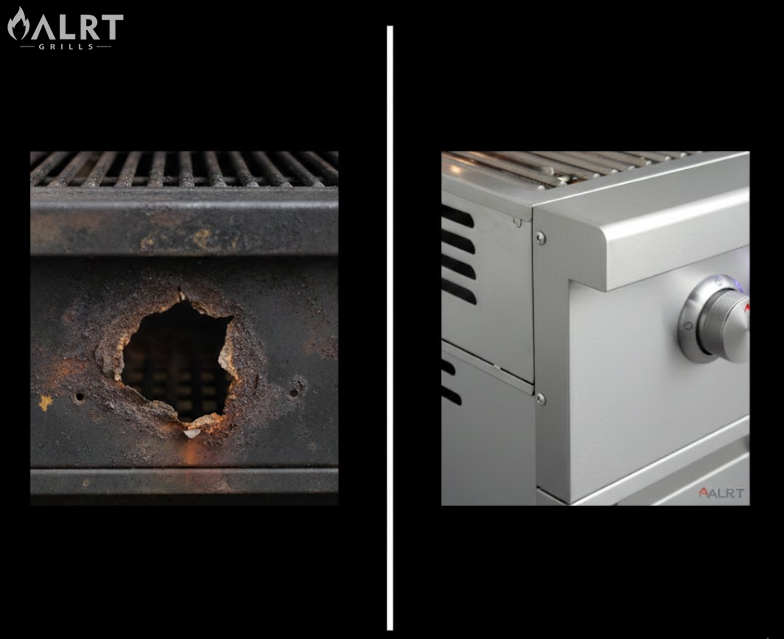
Rust is the arch-nemesis of outdoor equipment. However, as manufacturers, we distinguish between *surface rust* and *structural corrosion*.
Light surface rust on cast iron grates can often be scrubbed off and re-seasoned. However, if you spot rust in the following areas, the unit is unsafe:
The Firebox: If the bottom of the grill casting is flaking, thinning, or has rusted through, this is a critical failure. A compromised firebox cannot contain heat effectively and poses a significant risk of hot embers or grease falling onto your gas tank or patio deck.
The Burner Tubes: If the burners crumble when you touch them or have large, irregular holes rusted into them, they cannot be saved.
The Cart/Frame: Give your grill a gentle shake. If it wobbles significantly, the joints may be suffering from metal fatigue.
Why Upgrade?
Modern premium grills utilize 304-grade stainless steel, materials specifically chosen for their resistance to oxidation. If your old steel grill is crumbling, you are fighting a losing battle against chemistry.
The Ignition System Has Officially Quit
*Click... Click... Click... Silence.*
We know the frustration well. Piezoelectric starters are often the first component to fail on budget-friendly grills. Sometimes, it’s just a battery or a dirty electrode. But if you have cleaned the contact points, changed the battery, checked the wiring, and it *still* won't light, the system is dead.
The Safety Risk:
Many users resort to the "match trick" or using a long-neck lighter to manually ignite the gas. We must be serious here: **This is a safety risk.** Allowing gas to pool in the cookbox while you fumble with a lighter can lead to a "flashback"—a sudden, explosive ignition that can singe eyebrows or burn arms.
Why Upgrade?
Newer grills feature continuous electronic ignition systems or "crossover" technologies (like Jetfire) that ensure a reliable start, every single time, even in damp weather.
Uncontrollable Flare-Ups and Grease Fires
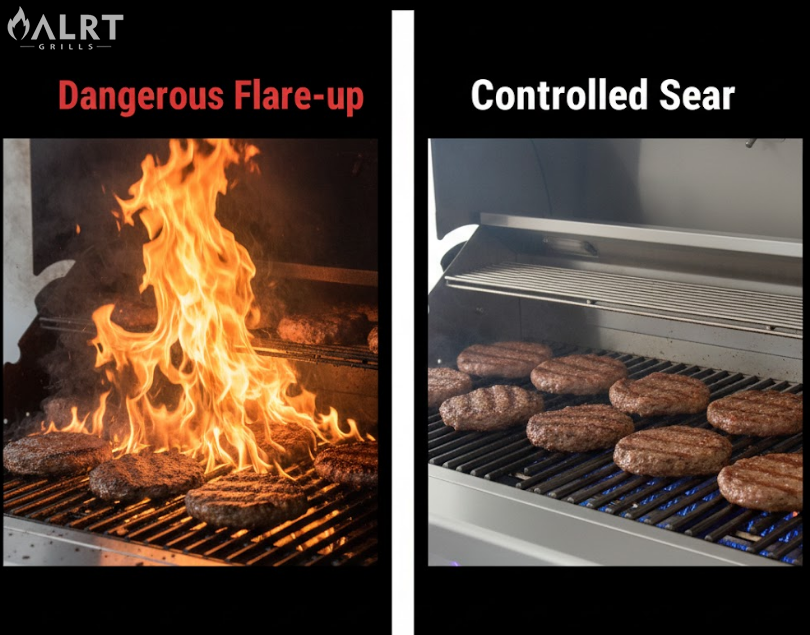
A little flame licking the meat is good; it creates that smoky BBQ flavor. But if your grill resembles a towering inferno every time you cook a fatty burger, you have a mechanical problem.
The Engineering Flaw:
Older grills often lack advanced grease management systems. Grease drips directly onto the burners or pools in the bottom of the cookbox, creating a layer of flammable sludge.
The Modern Solution:
Today's high-performance grills utilize **Vaporizer Bars** (or heat tents). These angled steel bars sit above the burners:
They protect the burners from direct grease contact.
When juice hits them, it vaporizes instantly, returning flavor to the food.
Any excess grease is channeled away from the flames into an easy-to-clean catch pan.
If you cannot step away from your grill for 30 seconds without a fire erupting, the internal design is no longer functioning.
The "Yellow Flame" Warning
This is a technical red flag that requires your immediate attention.
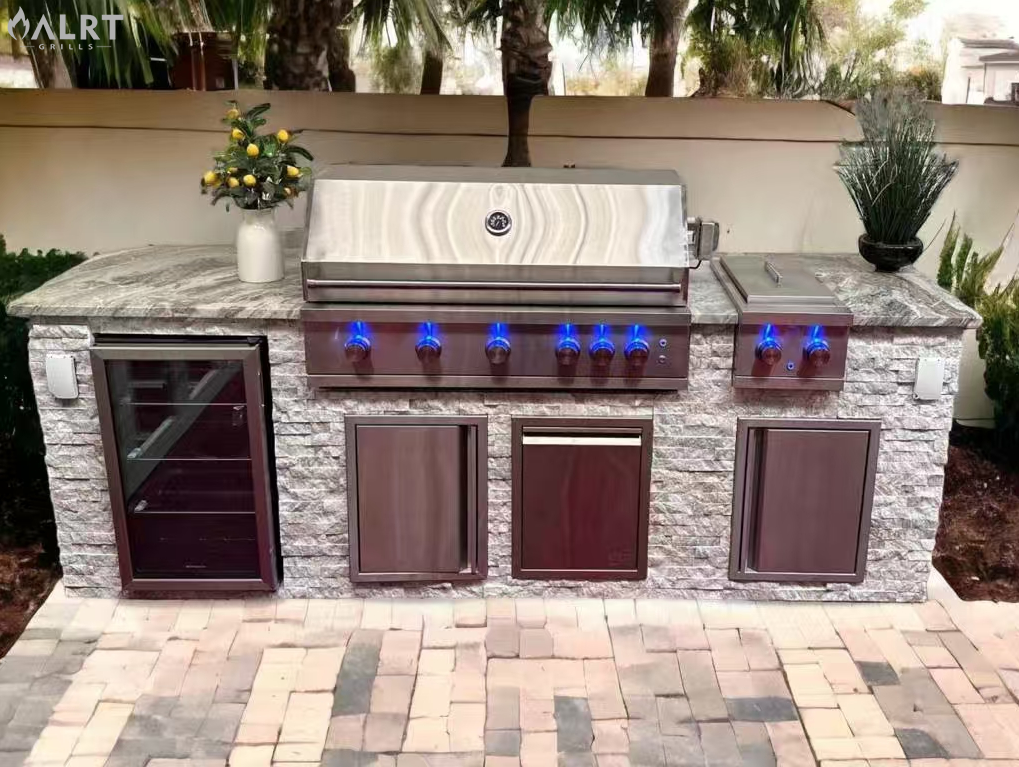
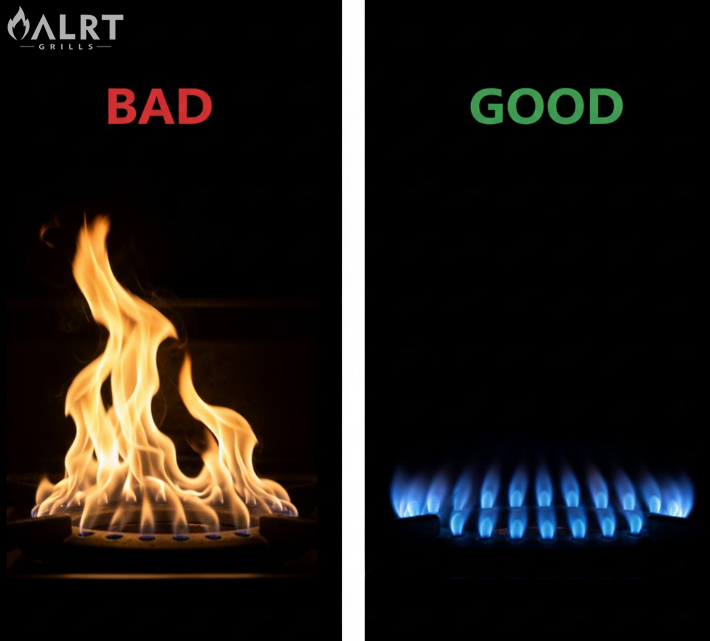
Next time you light your grill, look closely at the flame pattern. A healthy gas grill should produce a **blue flame** with perhaps a tiny yellow tip.
Yellow or Orange Flames: This indicates **incomplete combustion**. It could mean the air shutters are clogged, the valves are misaligned, or the regulator is failing. Incomplete combustion produces low heat, soot on your food, and, more dangerously, **Carbon Monoxide**.
Hissing Sounds: If you hear hissing near the tank or smell rotten eggs, you may have a cracked hose.
A new grill guarantees a sealed, pressure-tested gas system, reducing these risks immediately.
Your Culinary Ambitions Have Outgrown Your Gear
Sometimes, the grill isn't "broken"—it’s just obsolete for your lifestyle. The wobbly two-burner model just can't keep up with your current needs.
You might find yourself needing features that only modern manufacturing can provide:
Larger Cooking Surface: The ability to grill for a crowd.
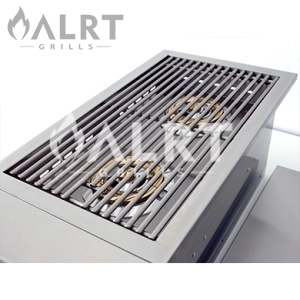
Side Burner: For simmering sauces or preparing side dishes.
Rear Infrared Burner: For use with a rotisserie kit.
Sear Station: A dedicated, high-heat zone to get steakhouse-quality sear marks.
Upgrading isn't just about replacing a broken tool; it’s about unlocking new culinary possibilities.
The Math Doesn't Add Up (Repair vs. Replace)
This is simple economics. If you need to replace major components (burners, grates, heat tents, igniter kit), the costs add up quickly, often reaching $250+.
The Manufacturer's Rule of Thumb:
If the cost of repairs approaches 40-50% of the price of a brand-new unit, stop. It is more economically sound to upgrade. You get a fresh warranty, better technology, and zero headaches.
Conclusion: Investing in Performance and Safety
When you look at that rusting metal box in your backyard, remember that grilling is meant to be a leisure activity, not a chore. By upgrading to a modern gas grill, you are investing in **safety**, **reliability**, and the **flavor** of your food. You are buying back the time you used to spend scrubbing rust and fighting grease fires.
Don't let a failing appliance ruin your summer gatherings. Embrace the innovation of modern grilling and get back to what matters: creating delicious memories with the people you love.
Frequently Asked Questions (FAQ)
Q1: How long should a good gas grill actually last?
A: A standard big-box store grill might last 3-5 years. However, a high-quality unit made from heavy-gauge stainless steel , if covered and cleaned regularly, can last 10 to 15 years or more.
Q2: Can I just take the parts from my old grill and use them in a new one?
A: No, we strongly advise against this. Burners, valves, and grates are engineered for specific firebox dimensions and BTU outputs. Mixing parts can lead to dangerous gas leaks, uneven heating, or poor performance. Always use OEM (Original Equipment Manufacturer) parts or buy a new unit.
Q3: Is it worth paying extra for an Infrared Burner or Sear Station?
A: If you love steaks, absolutely. Infrared burners use radiant heat to penetrate the meat directly and reach much higher temperatures instantly, creating that professional crust that locks in juices.
Q4: Do I need to throw away my propane tank when I buy a new grill?
A: Not necessarily! Propane tanks are universal (in most regions). Check the date stamped on the collar of the tank; if it is within its expiry date (usually 10-12 years from manufacture) and isn't rusted, you can hook it right up to your new grill.