 English
 Italian
 Russian
 German
 Arabic
 Spanish
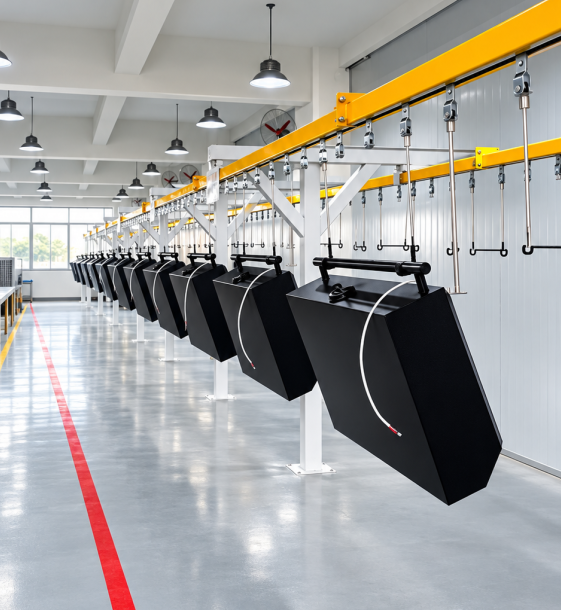
ALRT GRILLS. When people see a grill, they usually notice its appearance, size and functions first. I would like to show you where it really begins. To me, a reliable grill is not created only when it is packed for shipment. It takes shape through material preparation, structural forming and surface finishing, step by step, on a clear and stable production line.
From Materials to Grill Body: Starting with a Traceable Flow
Before assembly begins, metal components go through cutting, forming, welding and preparation. Each part has a defined place and purpose, and it must match the components that follow. I divide the work into clear checkpoints so that the right part is handled at the right time and products keep their sequence as they move through the factory. The clearer the flow, the easier it is to identify issues and improve the process.
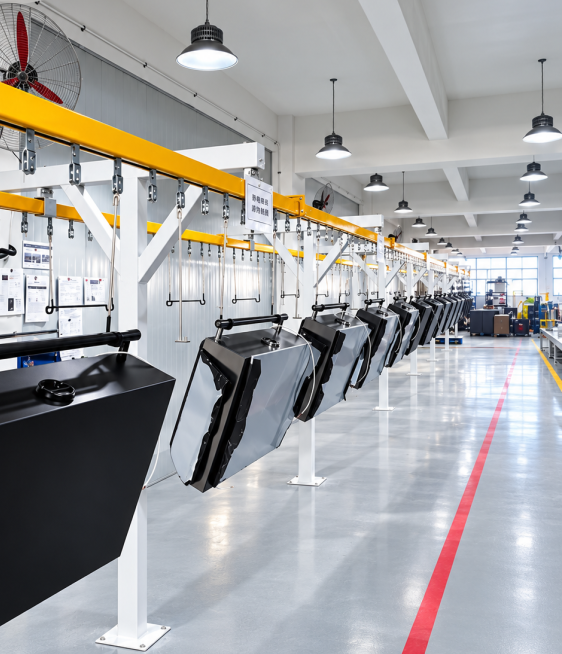
The Overhead Conveyor: Connecting Every Workstation
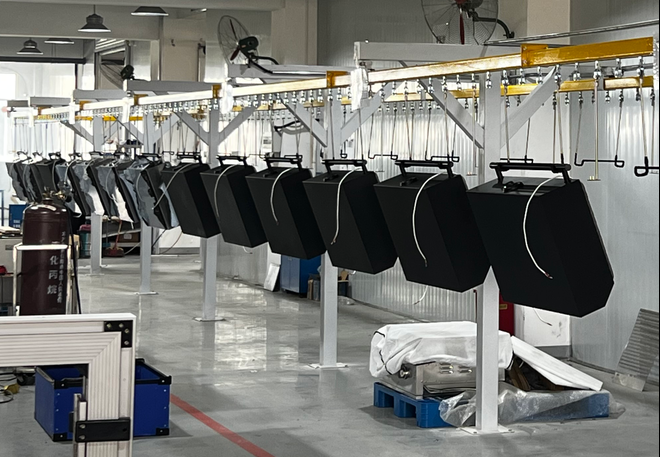
The most visible feature in my workshop is the yellow overhead conveyor that runs through the space. Dedicated hooks carry the grill bodies along a planned route, from one workstation to the next. This reduces repeated handling and lowers the chance of impact, mix-ups or unnecessary waiting during transfer. More importantly, the conveyor connects separate stations into one system: the work completed at one stage can move smoothly to the next.
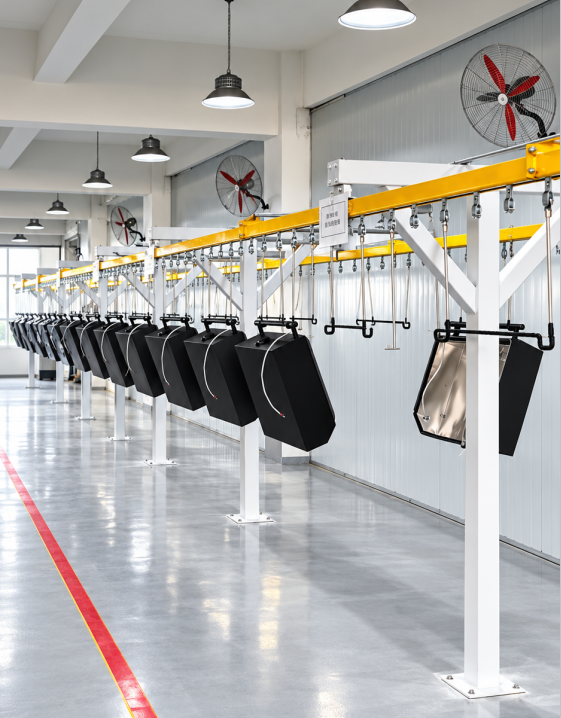
Surface Finishing: Durability Built Into the Details
A grill has to face heat, grease, moisture and outdoor conditions, so surface finishing is a stage I take seriously. The body goes through cleaning, treatment, coating and curing to achieve a consistent and stable finish. The overhead system keeps each body in a suitable position, making it easier to cover edges and exposed surfaces and to check the coating for smoothness, color consistency and visible defects around connection points. Much of a product's durability is not obvious at first glance, but it becomes clear over years of use.
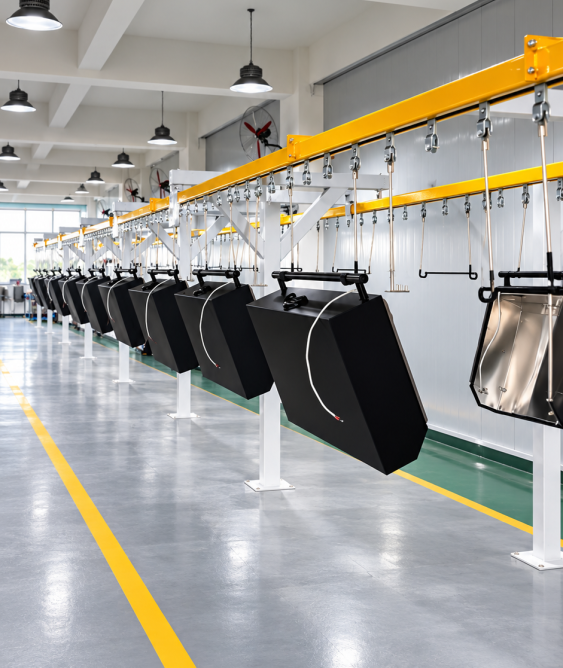
Standardized Assembly: Efficiency Is More Than Speed
The efficiency I believe in is not simply moving products faster. It is making every pass through the line more stable and repeatable. Dimensions, hole positions, weld quality, structural connections and assembly fit all need to be checked at the appropriate station. Standardized work allows different team members to follow the same requirements and makes training, handover and exception handling clearer. The result is less rework and a better use of time and materials.
Visual Management: Clear Routes Keep Teams Moving
In the photos, colored floor lines define routes and work boundaries, while bins, carts and worktables are positioned according to the needs of production. To me, cleanliness is not for display; it is part of efficiency. Clear routes help people and materials reach their destinations safely and quickly. Defined areas make parts easier to find and the workplace easier to keep in order. When information on the shop floor is visible, the team can focus more of its attention on the product itself.
Automation and Human Expertise: Both Matter
An automated line does not mean a factory no longer needs people. Conveyors, hooks and workstations require maintenance, and the production rhythm needs continuous adjustment as orders and product structures change. More importantly, many quality decisions still depend on human experience: whether an edge is smooth, whether a connection is secure, and whether a part fits and operates properly. My goal is not to replace everyone with equipment. It is to let equipment handle predictable, repetitive work while the team applies its expertise to inspection, adjustment and continuous improvement.
A Stable Rhythm Also Supports Flexible Orders
A stable production rhythm does not mean making only one type of product. Once the conveyor route, fixtures and inspection checkpoints are clearly defined, I can schedule grill bodies with different models, colors or configurations in a more organized way. Clear batch management helps the team separate materials and orders, reduces confusion during changeovers and gives customers better visibility into project progress. Whether the need is ongoing replenishment or a specific customization project, I want a transparent and controlled process to support a more reliable delivery experience.
From Our Production Line to Your Outdoor Table
When a grill leaves the production line, it still goes through final inspection, accessory confirmation, packing and shipment before reaching a customer's backyard, patio, restaurant or campsite. I want customers to receive more than a good-looking product. I want them to receive an outdoor appliance with a dependable structure, intuitive use and a place in real life. Every organized movement on the line points toward the same result: a grill that can do its job steadily when it meets real heat, smoke and gatherings.
My Commitment to Manufacturing
This is how I see ALRT GRILLS: using automation to improve efficiency, standardization to protect consistency and human expertise to refine every detail. I will continue to optimize our production flow and shop-floor management so that every grill leaving the factory can stand up to time, heat and real-world use. A truly dependable product is not discovered at the final inspection; it is carefully made at every stage of production.